

 English
 русский
 Español
 عربى
عربى

Industry News
Panelized Epoxy Board Factory: The Substrate That Holds the Circuit
2026-09-04
A printed circuit board is copper traces on epoxy laminate. The epoxy board is the foundation. It insulates the traces, holds the components, and stays dimensionally stable through the heat of soldering and the stress of service. A panelized epoxy board factory produces this material in standard sheet sizes that PCB fabricators feed into their drilling, plating, and etching lines. The panel has to be flat, the thickness uniform, and the epoxy formulation correct for the thermal and electrical demands of the board. For PCB manufacturers and electronics OEMs, the panel supplier sets the baseline for everything the finished board becomes.
What the Factory Actually Makes
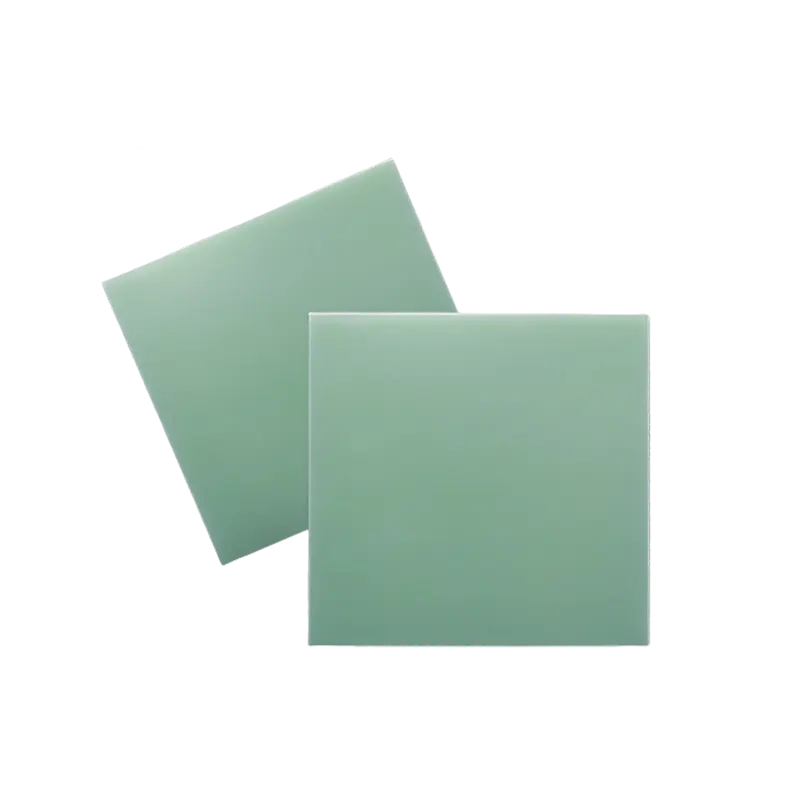
The product is a copper-clad laminate. Layers of glass cloth are saturated with epoxy resin, stacked with copper foil on one or both sides, and pressed under heat and pressure. The result is a rigid sheet. The fabricator etches the copper into circuits. The epoxy-glass underneath remains as the structural and insulating base.
A panelized epoxy board factory produces these sheets in standard sizes, typically 1.2 by 1.0 meters or larger, and in thicknesses from 0.2 millimeters up to 3.2 millimeters and above. The copper weight ranges from half an ounce per square foot for fine-pitch digital boards to three ounces or more for power electronics.
The panel has to be flat. A panel that arrives with a bow or twist causes registration problems at the solder paste printer and the pick-and-place machine. A panelized epoxy board factory controls the pressing cycle to less internal stress so the panel lies flat off the press and stays flat through the fabricator's thermal processes.
The Epoxy Formulation That Sets the Limits
Not all epoxy boards are the same. The glass transition temperature, the Tg, is the number that tells the designer when the resin softens. Standard FR-4 has a Tg around 130 to 140 degrees Celsius. That works for consumer electronics and basic industrial boards. It does not work for lead-free soldering at higher temperatures or for automotive and aerospace applications that see heat in service.
A panelized epoxy board factory offers mid-Tg grades around 150 degrees and high-Tg grades above 170 degrees. The higher the Tg, the better the board holds up through multiple thermal cycles. A fabricator building boards for a car engine bay does not order standard FR-4. They order high-Tg laminate.
The epoxy also affects electrical performance. The dielectric constant and the loss tangent determine how signals propagate through the board. High-speed digital design needs a low, controlled dielectric constant. A panelized epoxy board factory that publishes dielectric data at multiple frequencies gives the designer the information needed for impedance calculations.
Copper Bond Strength and Peel Resistance
The copper foil is bonded to the epoxy under heat and pressure. The strength of that bond is measured as peel strength, the force needed to pull the copper away from the laminate. A board that goes through reflow soldering and rework has to hold its pads. A panelized epoxy board factory with proper foil treatment and pressing parameters produces peel strength above the industry baseline.
The foil itself matters too. Standard electrodeposited copper has a rough adhesion surface that bonds well but limits fine-line etching. Low-profile foil is smoother, which allows finer traces with less undercut. A panelized epoxy board factory that offers both lets the fabricator match the foil to the circuit density.
Thickness Control and Why It Matters
Controlled-impedance boards need a predictable dielectric thickness. The thickness of the epoxy between the copper layers determines the impedance of the traces. A variation of a few microns shifts the impedance and degrades the signal. A panelized epoxy board factory holds thickness tolerance tight across the full panel so the fabricator can rely on the published value.
The thickness also affects drilling and plating. A panel that is too thick in one area and too thin in another drills unevenly and plates with varying hole wall thickness. Consistent thickness means consistent processing through the entire fabrication line.
Moisture, Measling, and the Oven Test
Epoxy laminate absorbs moisture from the air. A panel stored in humid conditions absorbs more. When that panel hits the reflow oven, the moisture flashes to steam and the board delaminates. Blisters form between the copper and the epoxy. The board is scrap.
A panelized epoxy board factory packages panels with moisture barrier film and specifies storage conditions. Some panels are baked before shipment to drive out residual moisture. The fabricator still has to handle the material properly, but the factory's job is to ship panels that start dry.
Measling is the appearance of small white spots in the laminate. It comes from contamination or moisture trapped during the pressing cycle. The spots are cosmetic until they are not. In high-humidity service, they become leakage paths. A panelized epoxy board factory that controls the prepreg storage conditions and the pressing environment prevents measling.
Here is what a panelized epoxy board factory has to deliver:
- Standard panel sizes matched to fabrication line tooling
- Thickness tolerance held across the full sheet
- Tg rating certified for the intended solder process and service temperature
- Copper peel strength that survives reflow and rework
- Low moisture absorption and controlled packaging
- Dielectric data at relevant frequencies
The Fabricator's Perspective
A PCB fabricator runs hundreds of panels a day. The material has to behave the same way every time. The drill has to cut clean holes. The etch has to remove copper evenly. The solder mask has to adhere. The panel has to stay flat through the process.
A fabricator that switches panel suppliers to save a few percent risks the entire line. A batch of panels with high moisture content blisters in the reflow oven and every board is scrap. A batch with poor thickness control shifts the impedance and the boards fail final test. A panelized epoxy board factory that ships consistent material is worth more than the price difference.
The electronics industry depends on the panel. The panel depends on the factory. A panelized epoxy board factory that controls the epoxy formulation, the copper bond, the thickness, and the moisture content ships material that the fabricator can trust. The boards that come off the line go into products that work. That is the point.



GET A QUOTE FOR COMPOSITE INSULATION PANELS.
-
 Phone
+86-0570-4939199
Phone
+86-0570-4939199
-
 E-mail
[email protected]
E-mail
[email protected]
Product Categories
About Company
Contact Us
- +86-0570-4939199/ +86-0570-4939188
- +86-13757003311/ +86-13906701423
- +86-13626705575
Company Address
-
 22-11 Lianhuashan Avenue, Lianhuashan Industrial Park, Jiangshan City, Zhejiang Province, China
Copyright 2025 Jiangshan Yongming Electrical Equipment Co., Ltd. All Rights Reserved.

Epoxy Board Manufacturer
