

 English
 русский
 Español
 عربى
عربى

Industry News
FR4 Epoxy Board: The Standard for Electrical Insulation
2026-06-19
In electrical and electronic manufacturing, few materials are as widely used as FR4 epoxy board. The name carries specific meaning. "FR" stands for flame retardant, indicating the material meets established standards for burning resistance. The "4" refers to a particular grade within a classification system. FR4 epoxy board describes a glass-reinforced epoxy laminate that combines electrical insulation, mechanical strength, and fire resistance in one product. The material is produced by layering woven glass fabric with epoxy resin that contains flame-retardant additives, then pressing and heating until the resin cures into a solid panel.
Manufacturing Process and Key Properties
The manufacturing of FR4 epoxy board begins with glass cloth rolls passed through a dip tank filled with epoxy resin mixed with flame-retardant compounds. Multiple layers of resin-coated fabric are stacked to achieve the desired thickness, then enter a heated hydraulic press where pressure and temperature are applied simultaneously. After curing, the panels cool under controlled conditions to prevent warping. FR4 epoxy board is valued primarily for its electrical insulation characteristics. It has high dielectric strength, meaning it can withstand significant voltage without conducting electricity. The dielectric constant remains stable across a range of frequencies, which matters in high-frequency applications.
Mechanically, FR4 epoxy board offers good strength for its weight. The glass reinforcement provides tensile and flexural strength. Key properties include:
- Flexural strength sufficient for mounting heavy components
- Low moisture absorption for dimensional stability
- Good impact resistance compared to unreinforced plastics
Flame Retardancy Standards
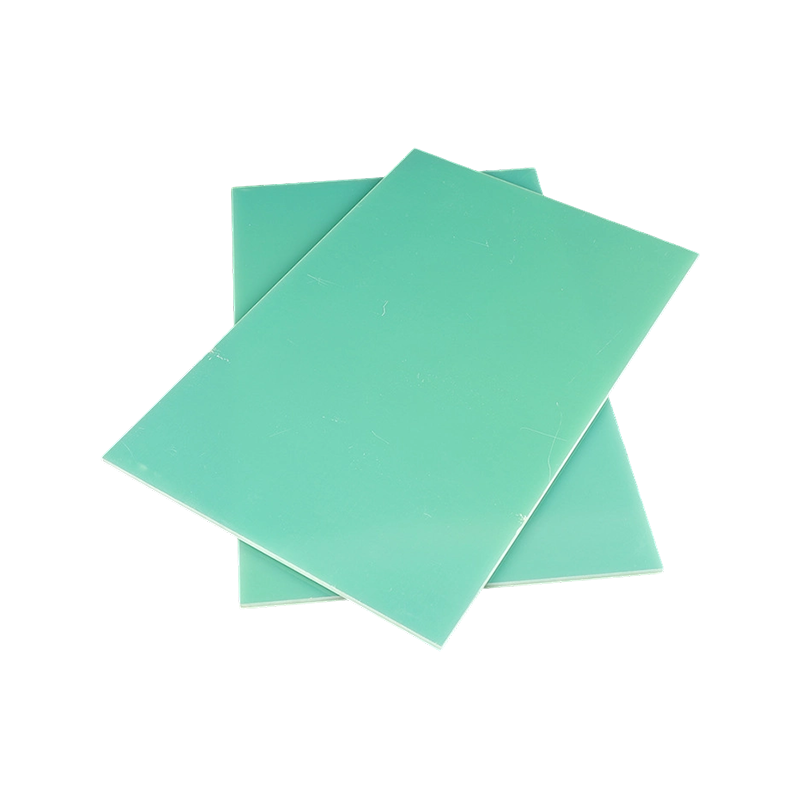
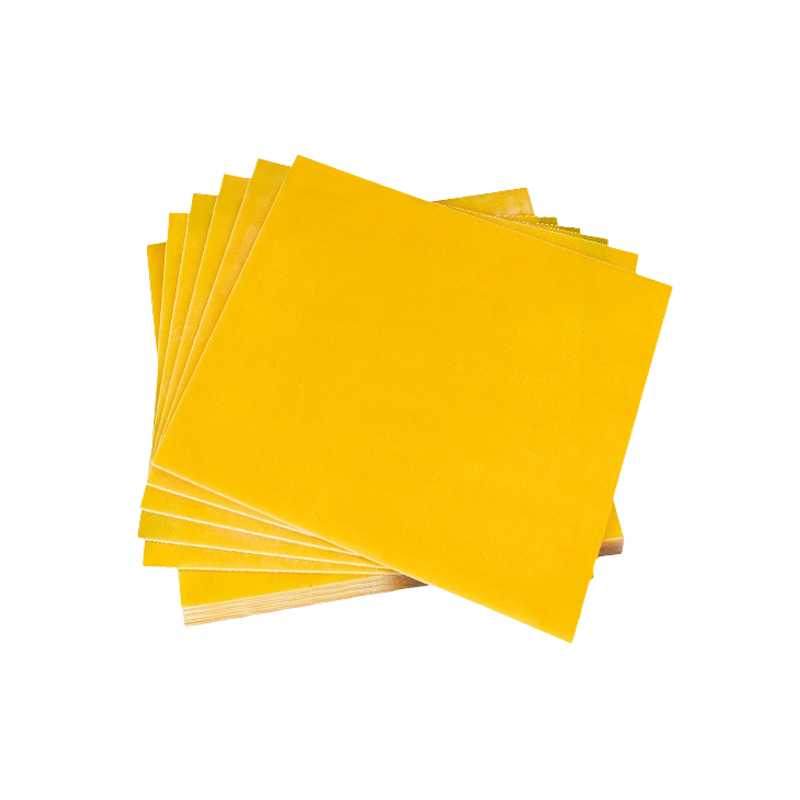
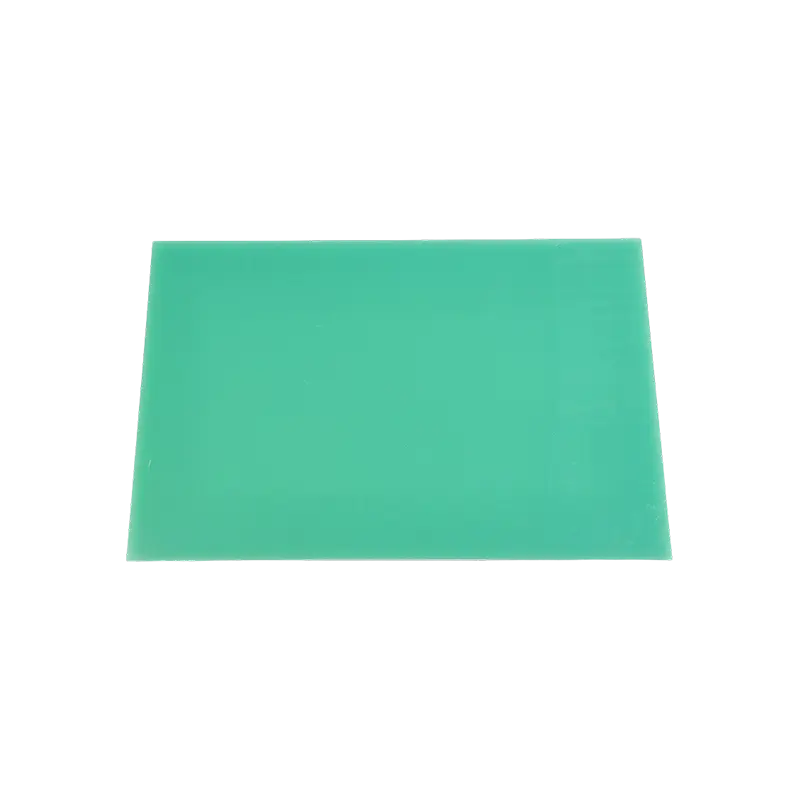
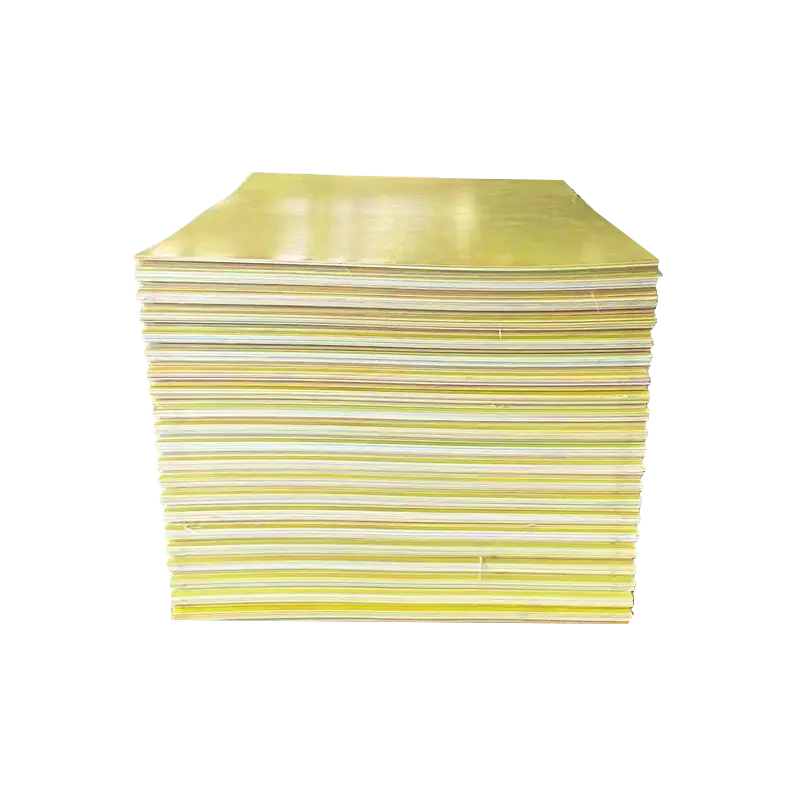
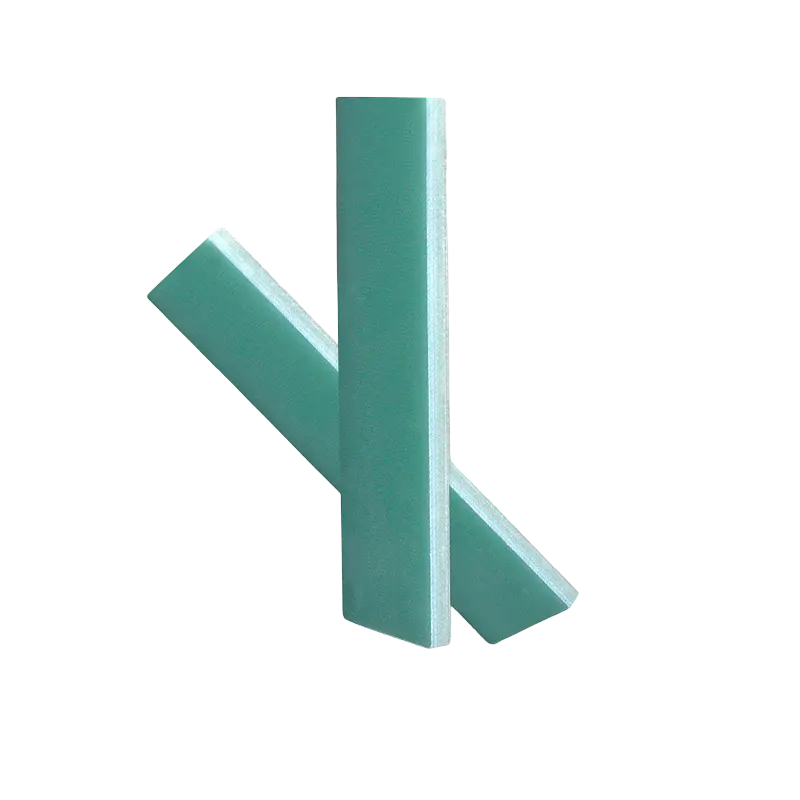
The flame-retardant characteristic of FR4 epoxy board is not optional for many applications. Electrical panels and enclosures must meet safety codes that limit the spread of fire. FR4 epoxy board typically achieves a UL 94 V-0 rating, the high classification for vertical burning tests. This rating means that when a flame is applied to a test sample, the material stops burning within a specified time after the flame source is removed. It also does not drip flaming particles that could ignite materials below. Users should note that not every green or yellow epoxy board is true FR4 epoxy board — some general-purpose boards lack the certified flame-retardant formulation.
Fabrication Methods
FR4 epoxy board can be cut, drilled, and shaped using methods similar to those for other glass-reinforced plastics. Carbide-tipped tools are recommended because the glass fibers are abrasive. Standard high-speed steel tools dull rapidly, producing ragged cuts and excessive dust. Shearing is possible for thinner boards, typically up to 1.6 millimeters. Thicker panels require sawing. Drilling requires sharp carbide bits with a point angle of 90 to 118 degrees, and a backing board helps prevent splintering at the drill exit point. Dust collection is recommended during all machining operations.
Common Applications
FR4 epoxy board appears across many industries. In electrical panel manufacturing, it serves as mounting plates for circuit breakers, terminal blocks, and relays. Its insulating properties keep live components separated from grounded enclosures. Printed circuit board fabrication is another major use, where thin FR4 epoxy board forms the substrate for copper-clad laminates. Other common applications include:
- Bus bar supports in power distribution equipment
- Test fixtures for electronic assembly verification
- Thermal barriers between heat-generating components
- Structural parts in control cabinets
From small electronic devices to industrial power systems, FR4 epoxy board provides a reliable combination of electrical insulation, mechanical strength, and fire resistance for equipment that must operate safely under electrical load and temperature stress.


GET A QUOTE FOR COMPOSITE INSULATION PANELS.
-
 Phone
+86-0570-4939199
Phone
+86-0570-4939199
-
 E-mail
[email protected]
E-mail
[email protected]
Product Categories
About Company
Contact Us
- +86-0570-4939199/ +86-0570-4939188
- +86-13757003311/ +86-13906701423
- +86-13626705575
Company Address
-
 22-11 Lianhuashan Avenue, Lianhuashan Industrial Park, Jiangshan City, Zhejiang Province, China
Copyright 2025 Jiangshan Yongming Electrical Equipment Co., Ltd. All Rights Reserved.

Epoxy Board Manufacturer
