
 English
 русский
 Español
 عربى
عربى Home / News / Industry News / Green Fiberglass Epoxy Board Color Fades Faster Than Mechanical Properties
Industry News
Green Fiberglass Epoxy Board Color Fades Faster Than Mechanical Properties
2026-07-31
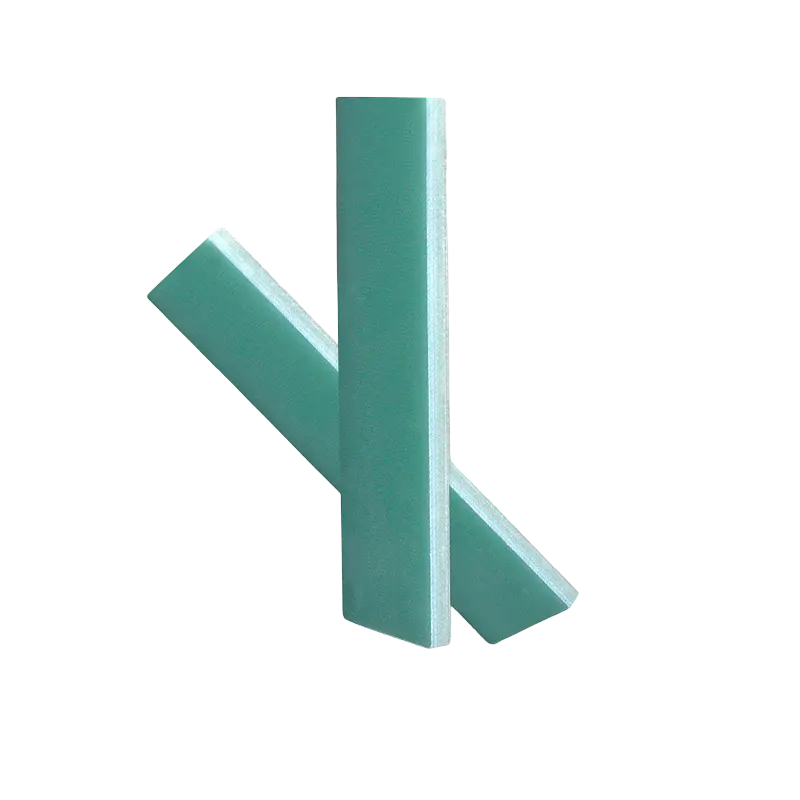
A green fiberglass epoxy board is chosen for its distinctive color as often as for its electrical insulation and mechanical strength. Equipment manufacturers specify the green shade to match branding, to differentiate test fixtures from production tooling, or simply to signal that the board carries a specific flame rating. The board arrives with a deep, uniform green hue. Six months on the factory floor, the color has faded to a pale yellowish-green around the edges and a dull olive near heat sources. The green fiberglass epoxy board that still meets every flexural and dielectric specification often gets replaced not because it failed electrically, but because the visual inconsistency triggers quality alerts from operators who expect a consistent appearance. The color degradation exposes a gap between decorative expectations and material reality.
Pigment Stability Depends on Resin Chemistry More Than Pigment Loading
The green color comes from pigments dispersed throughout the epoxy matrix. Most manufacturers use a blend of phthalocyanine green and yellow iron oxide. The phthalocyanine provides the blue-green base. The iron oxide adds warmth. The ratio determines whether the board reads as forest green, olive green, or emerald. But pigment loading alone does not guarantee color retention. The resin chemistry interacts with the pigment. Acidic hardeners can shift phthalocyanine toward brown. High exotherm during cure can degrade iron oxide, turning it reddish.
A green fiberglass epoxy board manufacturer that selects resins with neutral pH and controlled exotherm produces boards that hold their green tone through the press cycle. One that uses standard general-purpose resin with the same pigment loading ships boards that look green fresh off the press but shift color within weeks.
Heat and UV Exposure Bleach the Surface Layer
The factory floor exposes boards to heat from nearby soldering stations and to ultraviolet light from overhead fluorescent fixtures. Both degrade the pigment molecules at the surface. The phthalocyanine breaks down first, losing its blue component and leaving behind the yellow-brown iron oxide. The board appears to fade toward yellow. The deeper layers retain the original green, but the surface layer—the one that operators see—no longer matches the color standard.
The degradation penetrates only the top 0.1 to 0.2 millimeters. A green fiberglass epoxy board that looks faded can be sanded lightly to reveal fresh green beneath. But sanding changes the surface texture, and changed texture affects slip properties and handling characteristics. The board becomes a compromise between appearance and function.
Four factors determine how quickly a green fiberglass epoxy board fades in service:
- Pigment selection, because certain phthalocyanine grades resist UV degradation better than commodity grades
- Resin system, because epoxies with higher cross-link density provide better barrier protection against oxygen and UV penetration
- Hardener type, because amine hardeners can react with pigment molecules more aggressively than anhydride hardeners
- Post-cure temperature, because excessive post-cure heat accelerates pigment oxidation before the board ever reaches the customer
A green fiberglass epoxy board manufacturer that optimizes these four factors ships boards that keep their green shade for years. One that treats pigment as an afterthought ships boards that fade within months and generate appearance complaints that no mechanical test result can answer.
Color Shift Signals Thermal History Without Affecting Electrical Ratings
Operators learn to read the fading pattern. Green boards that show yellowing at the edges have experienced elevated temperature at the cutting step. Boards with dark green centers and pale corners have undergone uneven post-cure. The color tells a story about the manufacturing process. A green fiberglass epoxy board with uniform color across the full panel indicates consistent cure temperature and uniform pigment dispersion. One with blotches or streaks indicates poor mixing or temperature gradients in the press.
The electrical insulation resistance remains unchanged in faded boards. The flexural strength holds. But the visual inconsistency triggers inspections, generates questions, and wastes time. The board that looks wrong gets pulled for testing even when nothing is wrong. The cost of the extra testing often exceeds the cost of the pigment.
Color Matching Between Batches Requires Recipe Discipline
Buyers receive boards from multiple production runs. They expect the green to match across batches. A green fiberglass epoxy board manufacturer that measures pigment concentration by weight alone cannot guarantee visual consistency. Different pigment lots have different tinting strength. The same weight of a stronger pigment lot produces a darker board. The same weight of a weaker lot produces a lighter board.
Color measurement with a spectrophotometer catches the difference before the board ships. A manufacturer that measures each batch against a master standard adjusts the pigment loading to maintain a consistent L*a*b* value. One that skips the measurement ships boards that look green enough individually but stand out as mismatched when placed side by side on the customer's workbench.
The Color That Sells May Not Be the Color That Lasts
The green fiberglass epoxy board earns its order on the strength of its appearance. The color catches the eye. It signals quality, brand identity, and product differentiation. But the same color that sells the board also becomes the first reason the board gets questioned later. A board that fades triggers operator concern. A board that shifts color around heat sources generates maintenance requests. A board that mismatches between batches creates inventory sorting headaches.
A green fiberglass epoxy board manufacturer that communicates the color stability limits upfront—specifying expected fade under typical factory lighting and temperature—sets realistic expectations and avoids surprise complaints. One that promises "permanent green" without data creates disappointment when the board naturally changes over time. The pigment is not the core function, but the pigment determines whether the board looks like it belongs in the equipment. And looking like it belongs matters more than most spec sheets admit.


GET A QUOTE FOR COMPOSITE INSULATION PANELS.
-
 Phone
+86-0570-4939199
Phone
+86-0570-4939199
-
 E-mail
[email protected]
E-mail
[email protected]
Product Categories
About Company
Contact Us
- +86-0570-4939199/ +86-0570-4939188
- +86-13757003311/ +86-13906701423
- +86-13626705575
Company Address
-
 22-11 Lianhuashan Avenue, Lianhuashan Industrial Park, Jiangshan City, Zhejiang Province, China
Copyright 2025 Jiangshan Yongming Electrical Equipment Co., Ltd. All Rights Reserved.

Epoxy Board Manufacturer
