

 English
 русский
 Español
 عربى
عربى Home / News / Industry News / How Does G10 Epoxy Board Perform in High-Load Industrial Environments?
Industry News
How Does G10 Epoxy Board Perform in High-Load Industrial Environments?
2026-05-15
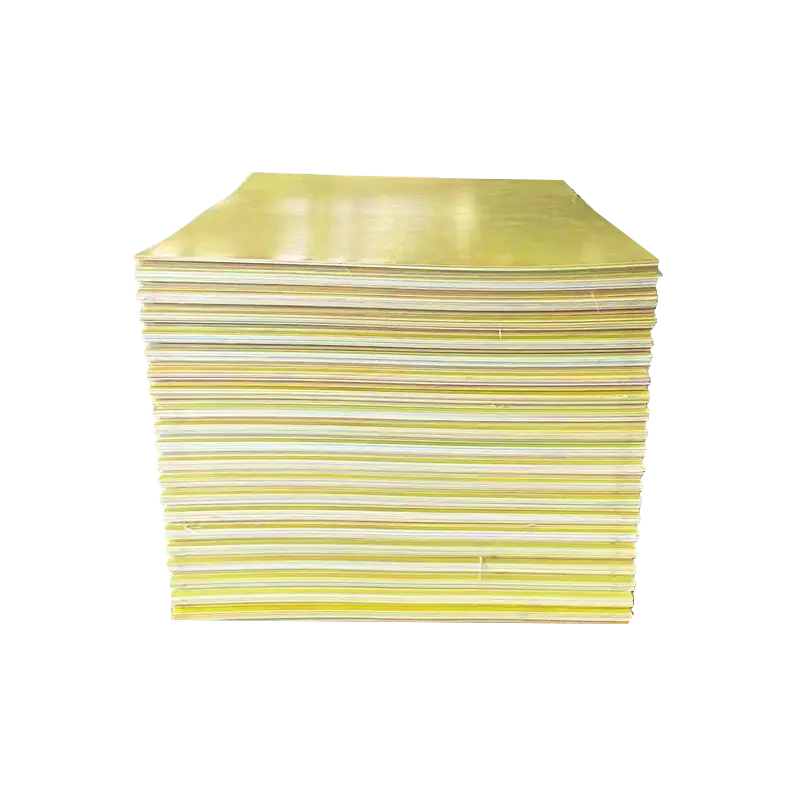
Industrial electrical systems rely on insulation materials that can handle mechanical stress, heat exposure, and long-term operational stability. From circuit boards to structural supports inside machinery, material selection affects both safety and performance. In this context, the G10 Epoxy Board is widely used as a laminated composite material for insulation and structural support in electrical and mechanical environments.
Instead of acting only as a protective layer, modern insulation materials also contribute to mechanical strength within equipment systems.
What G10 Epoxy Board Is and Why It Is Used
The G10 material is a fiberglass-reinforced epoxy laminate. It is produced by layering glass fabric with epoxy resin under heat and pressure. This process creates a rigid sheet with stable mechanical and electrical properties.
A G10 Epoxy Board is commonly used in environments where electrical insulation and structural support are both required. Its layered structure helps maintain dimensional stability under varying environmental conditions.
Typical applications include:
- Electrical switchgear insulation components
- Transformer support structures
- Industrial machine panels
- Circuit board reinforcement layers
- Mechanical spacing and mounting systems
These applications require materials that do not easily deform under stress or heat.
Manufacturing Process and Material Formation
The production of laminated epoxy boards involves controlled pressure curing and layering techniques. A G10 Epoxy Board is made by stacking fiberglass sheets and bonding them with epoxy resin before curing under heat.
The manufacturing steps generally include:
- Fiberglass fabric preparation
- Resin impregnation process
- Layer stacking and alignment
- Heat pressing under controlled pressure
- Cutting and surface finishing
Each stage influences density, thickness uniformity, and structural consistency across sheets.
Electrical Insulation Performance
One of the key functions of laminated epoxy boards is electrical insulation. A G10 Epoxy Board is designed to resist electrical conduction while maintaining structural rigidity.
This makes it suitable for use in environments where electrical currents and mechanical components are located close to each other. It helps reduce the risk of unintended electrical transfer between conductive parts.
Because of its stable dielectric properties, it is often used in equipment where safety spacing between components is important.
Mechanical Strength in Industrial Systems
Beyond electrical insulation, laminated epoxy materials are also valued for their mechanical performance. A G10 Epoxy Board can support structural loads and maintain shape under pressure, which makes it useful in equipment frames and support brackets.
Common mechanical applications include:
- Structural mounting plates
- Spacer components in machinery
- Load distribution panels
- Vibration-resistant supports
Its rigidity allows it to function in environments where both mechanical force and electrical insulation are required simultaneously.
Heat Resistance and Environmental Stability
Industrial environments often involve temperature changes, humidity, and continuous operation. Materials used in such conditions must maintain stable properties over time.
A G10 Epoxy Board can maintain its structure under moderate heat exposure and does not easily absorb moisture. This makes it suitable for use in control cabinets, industrial automation systems, and electrical enclosures.
Its stability helps reduce material deformation during long-term use in enclosed equipment systems.
Role in Electrical Equipment Design
Electrical engineers often select materials based on insulation class, mechanical strength, and ease of fabrication. A G10 Epoxy Board can be cut, drilled, and shaped into different components depending on design requirements.
This flexibility allows it to be used in both standard and customized electrical system designs. It is also compatible with CNC machining, which supports precision manufacturing in industrial settings.
Industrial Applications and Usage Scenarios
Different industries use laminated epoxy materials in various ways depending on system design requirements. A G10 Epoxy Board is commonly found in:
- Power distribution systems
- Railway electrical control units
- Industrial automation equipment
- Renewable energy control panels
- Heavy machinery electrical housings
Each environment benefits from a combination of insulation and structural support properties.
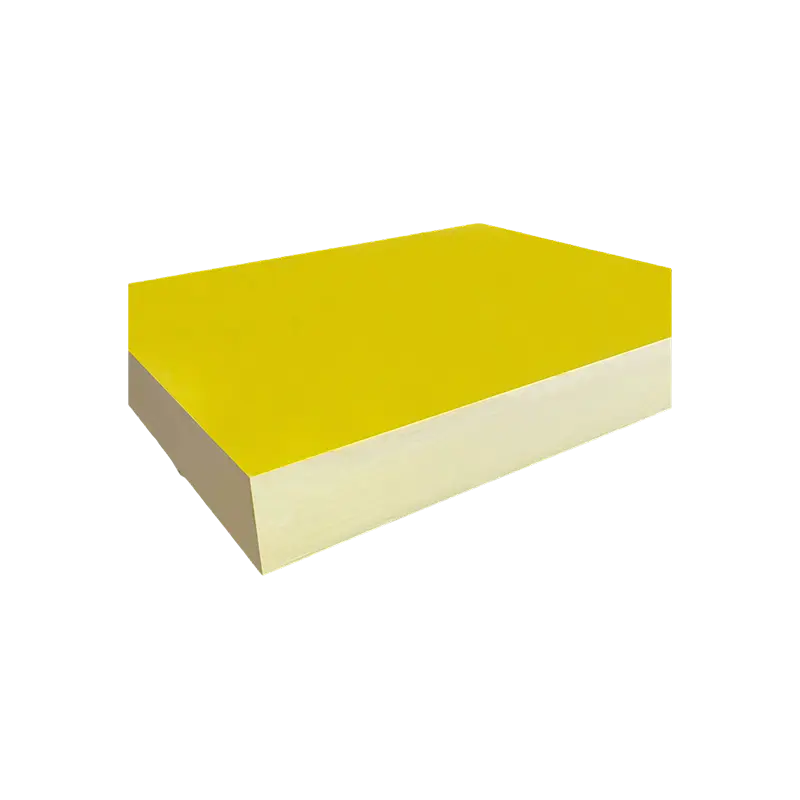
Electrical and mechanical systems continue to evolve toward higher integration and compact design. Material selection plays an important role in ensuring stability and safe operation. The G10 Epoxy Board remains a widely used laminated composite because it combines insulation performance with structural strength in a single material system.
As industrial equipment becomes more compact and multifunctional, demand for materials that support both electrical and mechanical requirements continues to grow across different engineering applications.


GET A QUOTE FOR COMPOSITE INSULATION PANELS.
-
 Phone
+86-0570-4939199
Phone
+86-0570-4939199
-
 E-mail
[email protected]
E-mail
[email protected]
Product Categories
About Company
Contact Us
- +86-0570-4939199/ +86-0570-4939188
- +86-13757003311/ +86-13906701423
- +86-13626705575
Company Address
-
 22-11 Lianhuashan Avenue, Lianhuashan Industrial Park, Jiangshan City, Zhejiang Province, China
Copyright 2025 Jiangshan Yongming Electrical Equipment Co., Ltd. All Rights Reserved.

Epoxy Board Manufacturer
