

 English
 русский
 Español
 عربى
عربى

Industry News
Antistatic Black Epoxy Board Fails When Resistivity Drifts
2026-07-17
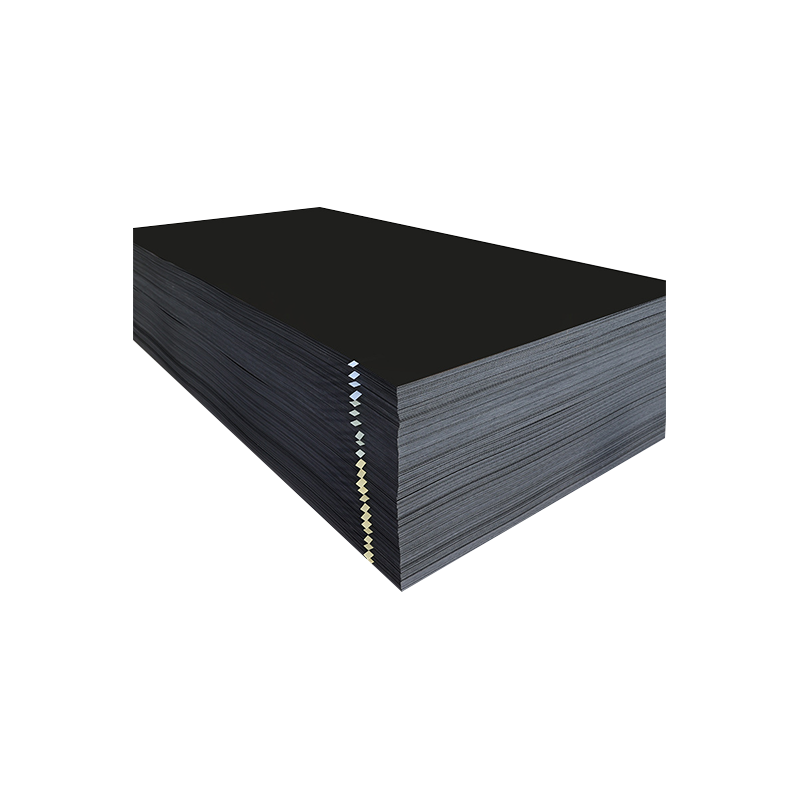
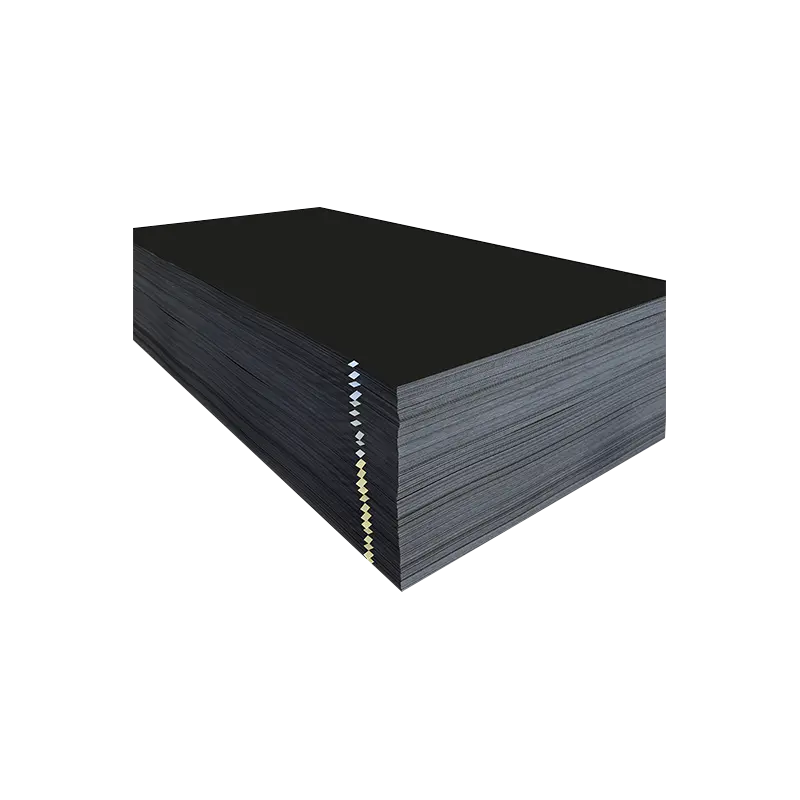
An antistatic black epoxy board is specified for one reason: it drains static charge before that charge damages sensitive electronics. Buyers order it for test fixtures, handling trays, and assembly tooling. They measure surface resistivity upon receipt, confirm it falls between 10⁶ and 10⁹ ohms per square, and put the boards into production. Three months later, the same board measures 10¹¹. The static no longer drains. Components fail during manual handling. The antistatic black epoxy board that cannot stabilize its conductive path becomes ordinary black epoxy board, and ordinary black epoxy board does not get reordered. Resistivity drift kills the product's value more reliably than impact damage or thermal degradation ever could.
Carbon Dispersion Determines Resistivity More Than Carbon Percentage
Manufacturers add carbon black to epoxy resin before lamination. The carbon particles form chains that carry electrical charge. More carbon lowers resistivity. Less carbon raises it. But the percentage alone does not guarantee uniformity. Poorly dispersed carbon clumps together, creating zones of high conductivity and zones of low conductivity across the same panel. A resistivity reading at one corner passes spec. A reading at the opposite corner fails.
The dispersion depends on mixing time, mixing speed, and the order in which ingredients enter the mixer. An antistatic black epoxy board manufacturer that standardizes these three variables produces consistent panels. One that varies mixing parameters between batches produces panels that read differently at every measurement point.
Post-Cure Heat Rearranges Carbon Particles
Freshly pressed panels show resistivity numbers that look acceptable. After post-cure oven treatment, the same panels show different numbers. Heat expands the epoxy matrix, and carbon particles shift position during expansion. Some conductive chains break. New chains form elsewhere. The net resistivity can move up or down by a full order of magnitude.
An antistatic black epoxy board manufacturer that measures resistivity before post-cure reports numbers that do not match what the customer measures. A manufacturer that measures after post-cure, and again after 24 hours of cooling, reports numbers that hold in the buyer's inspection lab. The second measurement catches the drift that the first measurement misses.
Surface Wear Removes the Conductive Layer
Carbon particles conduct only when they reach the board surface. Handling tools, fixture pins, and sliding components abrade that surface with every use. The epoxy wears away, and the carbon particles in the worn layer disappear. If carbon concentration remains uniform through the full board thickness, fresh particles replace the abraded ones. If carbon settled toward the surfaces during the press cycle—a common effect of particle density differences—the exposed subsurface contains fewer conductive particles, and resistivity rises.
Sectioning a sample panel and measuring resistivity across the cut edge reveals the through-thickness distribution. An antistatic black epoxy board manufacturer that performs this simple test catches settling problems before production scales. One that skips it discovers the issue when customer returns cite rising resistivity after 90 days of use.
Moisture Alters the Reading Without Altering Carbon Content
Carbon provides the primary conduction path. Absorbed moisture provides a secondary, ionic path. A board stored in humid conditions reads lower resistivity than the same board stored dry. The customer opens vacuum-sealed packaging, measures resistivity at 10⁷, and approves the lot. Two weeks later, in the dry assembly cleanroom, moisture has evaporated, and the same board reads 10¹⁰. The customer rejects the lot based on a number that changed without any change to the board's carbon content.
An antistatic black epoxy board manufacturer that packages boards with desiccant and moisture-barrier bags delivers resistivity stability. One that uses plain plastic bags delivers numbers that shift between the warehouse and the production floor.
Three steps stabilize resistivity from factory to final assembly:
- Package each panel in a vacuum-sealed moisture-barrier bag containing desiccant
- Include a humidity indicator card inside the package that changes color if moisture penetrated during transit
- Measure resistivity with the package opened at 23°C and 50% relative humidity, the same conditions specified in industry test standards
An antistatic black epoxy board manufacturer that follows these three steps ships boards that measure consistently at both ends of the supply chain. A manufacturer that skips them ships boards that pass the supplier's lab test and fail the buyer's, and the resistivity meter never lies about which one delivered the stable product.

GET A QUOTE FOR COMPOSITE INSULATION PANELS.
-
 Phone
+86-0570-4939199
Phone
+86-0570-4939199
-
 E-mail
[email protected]
E-mail
[email protected]
Product Categories
About Company
Contact Us
- +86-0570-4939199/ +86-0570-4939188
- +86-13757003311/ +86-13906701423
- +86-13626705575
Company Address
-
 22-11 Lianhuashan Avenue, Lianhuashan Industrial Park, Jiangshan City, Zhejiang Province, China
Copyright 2025 Jiangshan Yongming Electrical Equipment Co., Ltd. All Rights Reserved.

Epoxy Board Manufacturer
