

 English
 русский
 Español
 عربى
عربى
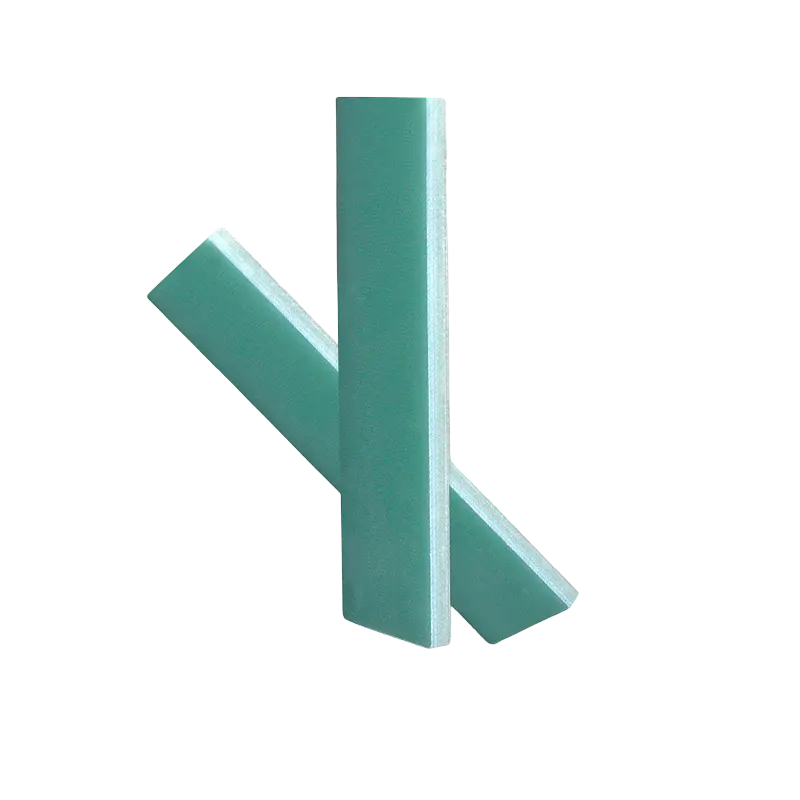
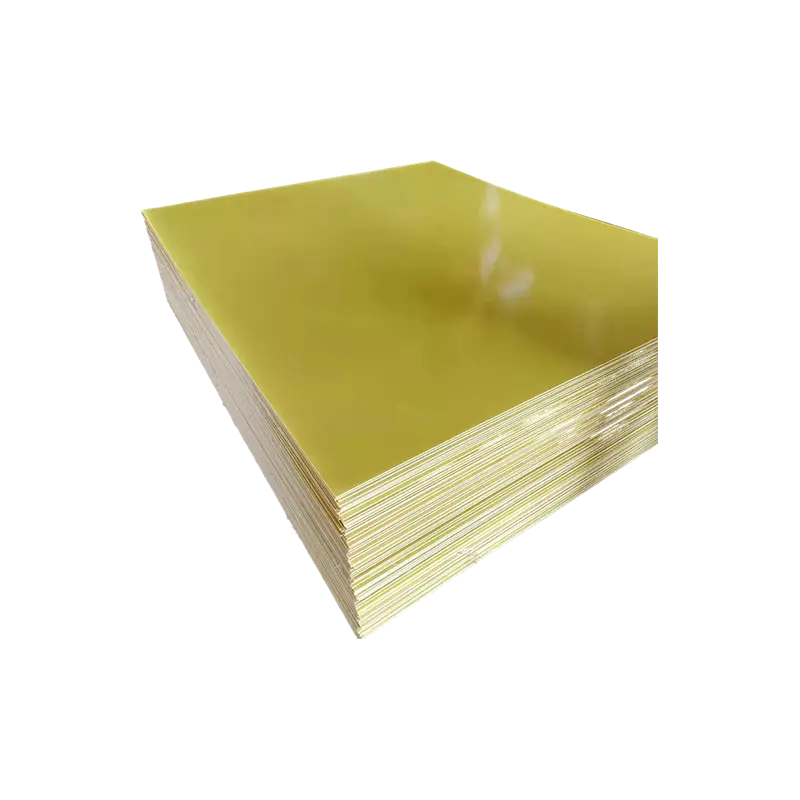
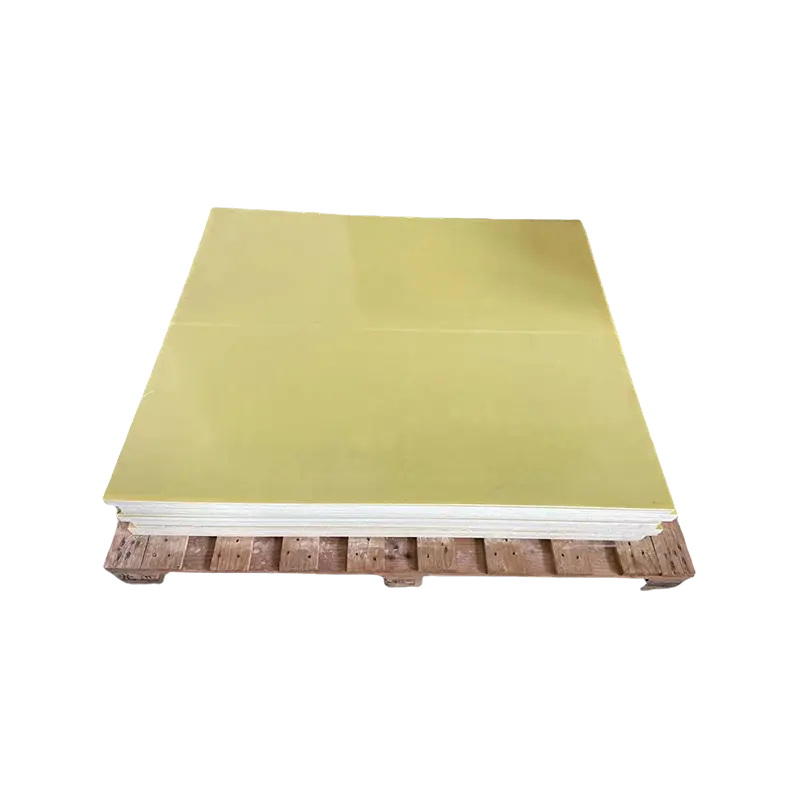
Fiberglass laminate is a versatile material widely used in electrical, industrial, and construction applications due to its excellent insulation properties and mechanical strength. Made by bonding layers of fiberglass fabric with resin, this laminate offers high resistance to heat, moisture, and chemical exposure, making it ideal for harsh environments. The material is commonly used in the production of circuit boards, electrical enclosures, and insulation components, where durability and reliability are crucial.
Additionally, fiberglass laminate has good dimensional stability and can withstand high-voltage applications, ensuring safety and longevity. Its versatility across various sectors, such as electronics, automotive, and energy, allows for custom applications, meeting specific operational requirements. This material is highly valued for its combination of strength, insulation, and resistance to environmental factors.
About Us
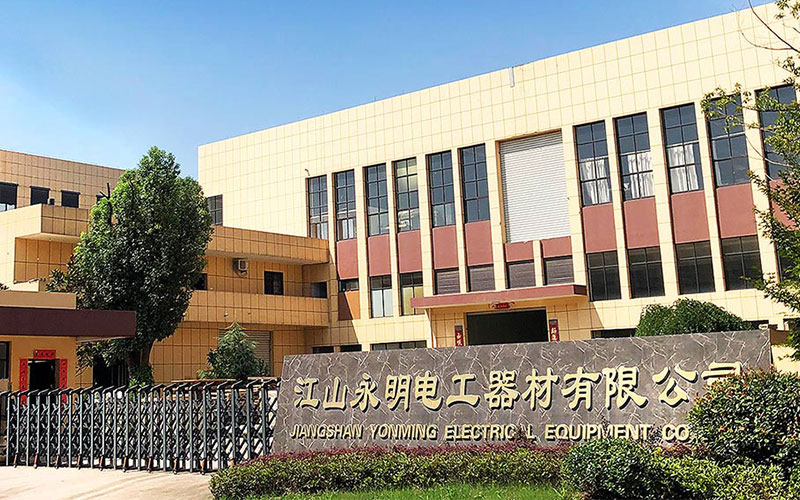
Jiangshan Yongming Electrical Equipment Co., Ltd. is a specializes in the R&D, production, and sales of epoxy boards. Located in the Lianhuashan High-Tech Development Zone of Jiangshan City, our strategic location provides us with convenient transportation and efficient logistics support.
Fiberglass Board Manufacturer and China Fiberglass Laminate factory primarily offer products such as G10 Yellow Class A epoxy boards, G10 Yellow Class B epoxy boards, FR4 epoxy boards, 3240 epoxy boards, 3021 epoxy boards, and other types of fiberglass cloth laminates. These materials are manufactured using electronic-grade fiberglass cloth and epoxy resin through a hot-pressing process, offering excellent mechanical and electrical properties. They are widely used in various industries including electronics and electrical engineering, industrial automation, and new energy.
Our R&D team continuously monitors market demands and technological advancements, consistently working on product upgrades and innovations to better meet customer needs. We also provide customized services, including size customization and material selection, to accommodate the specific requirements of different clients.
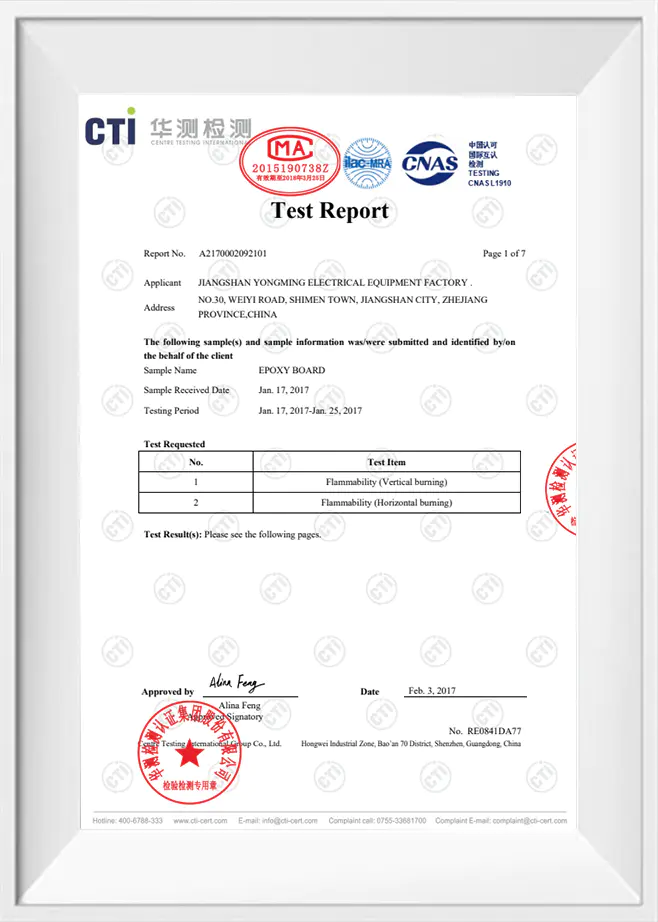
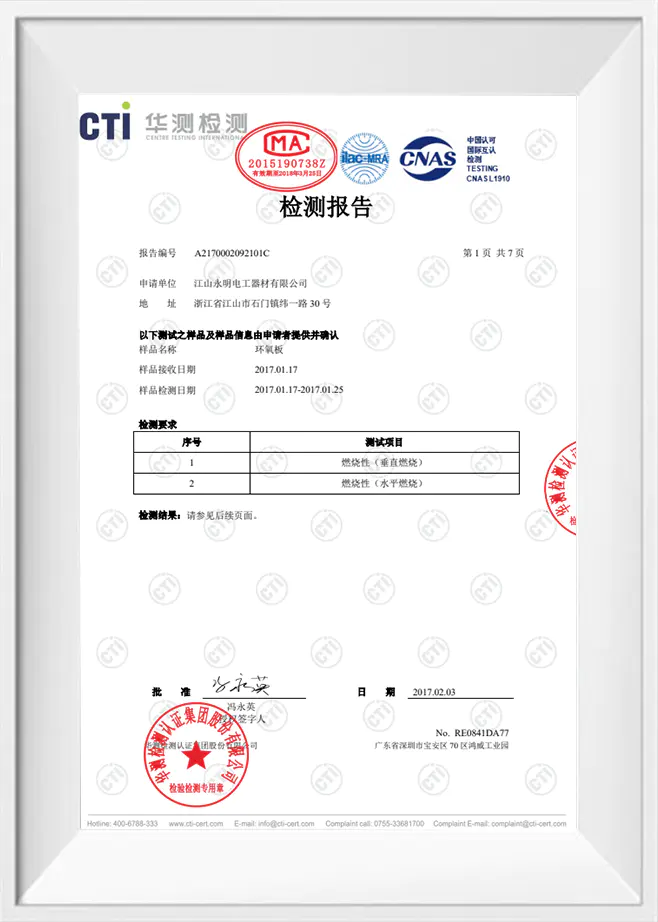
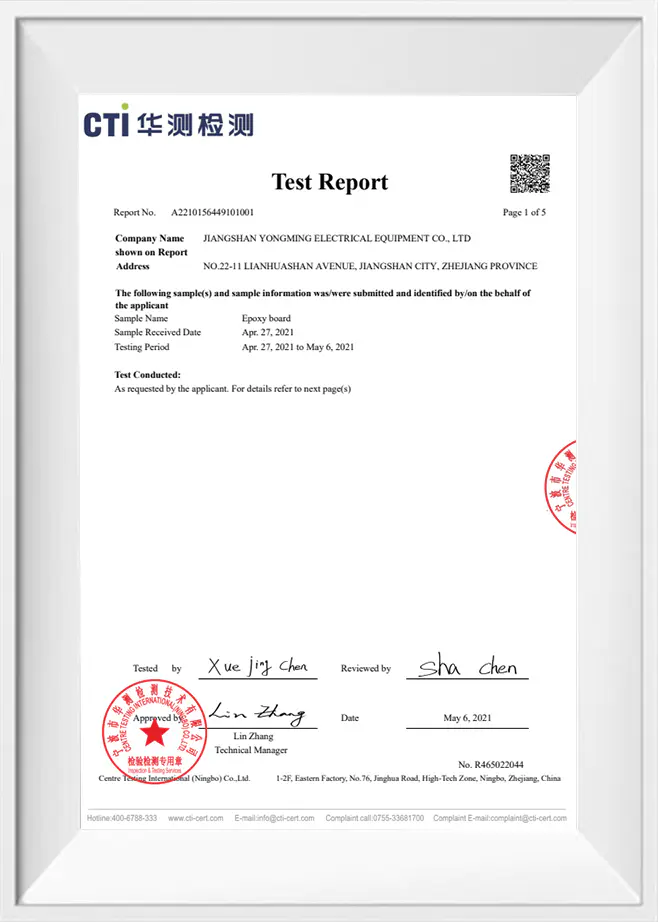
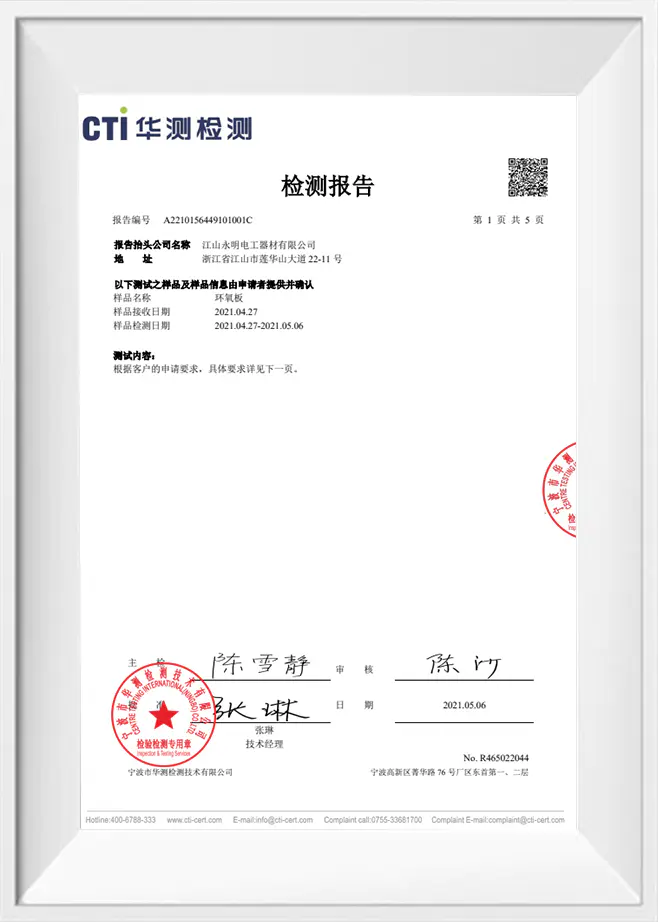
Certificate
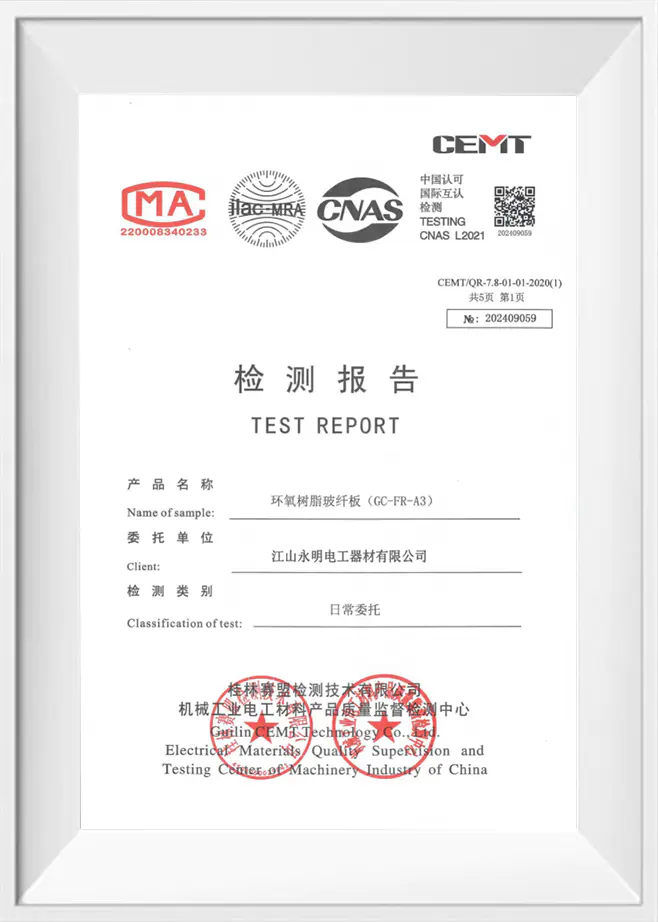
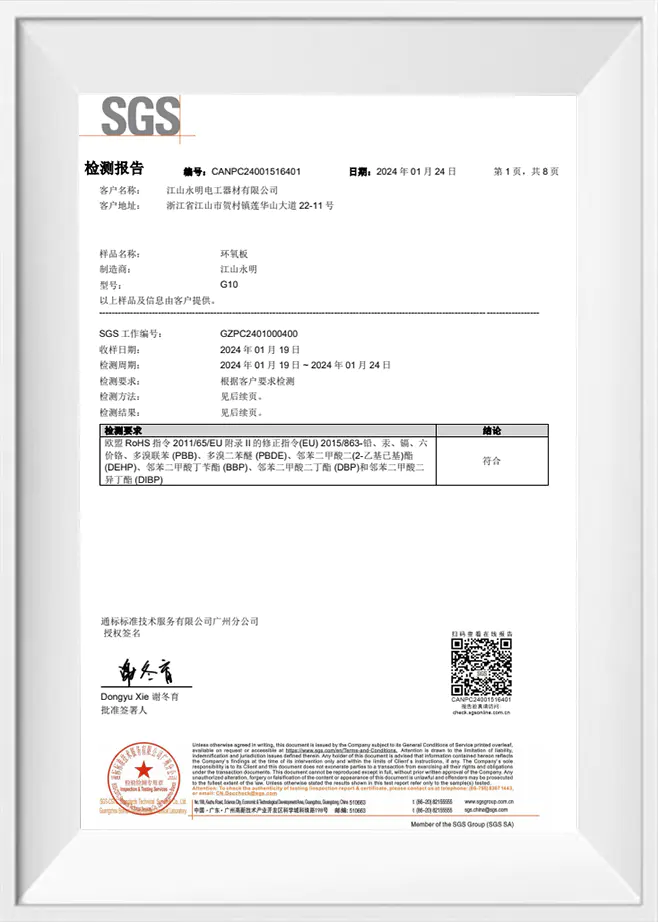
News
-
Industry News 2026-03-12
Electrical and industrial equipment rely heavily on materials that combine insulation, mechanical st...
View More -
Industry News 2026-03-12
Industrial systems rely on materials that combine insulation performance with structural stability. ...
View More -
Industry News 2026-03-12
Fiberglass laminate materials are widely used in industrial and electrical environments where insula...
View More -
Company News 2025-07-25
Jiangshan Yongming Electrical Equipment Co., Ltd. (hereinafter referred to as "Yongming") has offici...
View More -
Industry News 2025-07-25
The flame resistance of insulation board refers to the ability of insulation material to resist burn...
View More
Fiberglass Laminate KNOWLEDGE
What is a fiberglass board used for?
Fiberglass board is a rigid composite sheet manufactured by compressing fiberglass cloth or fibers with thermosetting resins under heat and pressure. The resulting material offers a unique combination of mechanical durability and electrical insulation, which makes it widely used in industrial and electrical systems.
In electrical equipment manufacturing, fiberglass boards function as insulation barriers, structural panels, and mounting substrates. Their non-conductive properties allow them to safely separate electrical components while maintaining mechanical stability.
Beyond electrical uses, fiberglass boards are also applied in machinery construction, transformer insulation, switchgear assemblies, and structural reinforcement panels. Because fiberglass boards resist moisture absorption and chemical exposure, they remain reliable even in humid or corrosive environments such as chemical plants or outdoor installations.
Another key advantage is dimensional stability. Unlike wood or some plastics, fiberglass boards maintain their shape when exposed to temperature fluctuations, preventing warping or deformation that could affect equipment performance.
Key Characteristics of Fiberglass Boards
| Property | Description | Industrial Benefit |
|---|---|---|
| Electrical Insulation | Non-conductive structure | Protects electrical systems |
| Mechanical Strength | High tensile and flexural strength | Supports structural loads |
| Moisture Resistance | Low water absorption | Reliable in humid conditions |
| Heat Resistance | Withstands elevated temperatures | Suitable for electrical devices |
| Chemical Stability | Resistant to solvents and oils | Ideal for industrial environments |
These properties explain why fiberglass boards are widely integrated into transformers, motors, circuit protection systems, and heavy equipment insulation structures.
What makes fiberglass laminate ideal for electrical insulation?
Fiberglass laminate is a multi-layer composite material created by bonding fiberglass fabric with resin under high pressure and temperature. The layering process enhances both mechanical strength and insulation performance, making fiberglass laminate one of the most reliable materials for electrical and electronic applications.
One of the main advantages of fiberglass laminate is its excellent dielectric strength, which allows it to withstand high voltages without electrical breakdown. This makes it a preferred material for manufacturing printed circuit boards (PCBs), electrical panels, and insulation components.
Another major benefit is its resistance to environmental stress. Fiberglass laminates maintain their integrity even when exposed to high temperatures, humidity, and chemicals. As a result, they are commonly used in power generation equipment, industrial control systems, and automotive electronics.
Fiberglass laminate also offers excellent dimensional stability, ensuring that components remain precisely aligned during temperature changes or mechanical stress. This stability is particularly important in electronics manufacturing, where microscopic circuit accuracy is required.
Typical Applications of Fiberglass Laminates
| Industry | Application |
|---|---|
| Electronics | Printed circuit boards (PCBs) |
| Power Equipment | Switchgear insulation panels |
| Automotive | Electrical component housings |
| Renewable Energy | Wind turbine control systems |
| Construction | Structural insulation boards |
Because of its strength-to-weight ratio, fiberglass laminate is also valued in structural applications where lightweight yet durable materials are required.
Why is fiberglass epoxy widely used in composite materials?
Fiberglass epoxy refers to fiberglass reinforcement combined with epoxy resin systems, forming a high-performance composite known for its exceptional strength, adhesion, and environmental resistance.
Epoxy resins bond tightly with fiberglass fibers, creating a material that performs well under mechanical stress, thermal cycling, and chemical exposure. Compared to other resin systems, epoxy provides superior bonding strength and reduced shrinkage during curing, resulting in more precise and reliable components.
This makes fiberglass epoxy particularly valuable in high-tech and heavy-duty industries, including aerospace, marine engineering, electrical equipment manufacturing, and advanced machinery production.
In electrical systems, fiberglass epoxy laminates are widely used for FR-4 circuit boards, which require excellent electrical insulation combined with structural stability. These materials prevent electrical leakage while supporting delicate electronic components.
Additionally, fiberglass epoxy composites demonstrate excellent fatigue resistance, allowing them to endure repeated mechanical loading without cracking or failure.
-
 Phone
+86-0570-4939199
Phone
+86-0570-4939199
-
 E-mail
[email protected]
E-mail
[email protected]
- +86-0570-4939199/ +86-0570-4939188
- +86-13757003311/ +86-13906701423
- +86-13626705575
-
 22-11 Lianhuashan Avenue, Lianhuashan Industrial Park, Jiangshan City, Zhejiang Province, China
Copyright 2025 Jiangshan Yongming Electrical Equipment Co., Ltd. All Rights Reserved.
Fiberglass Epoxy
